Discovering Unexpected Puddles During Peak Summer Humidity
August late-summer peak humidity is settling in, and as the kids get ready to head back to school, you might find yourself facing an unexpected household stressor: condensation vs. active leaks: diagnosing puddles under your basement pipes. Walking downstairs to grab a stored item and stepping into a pool of water instantly triggers a sinking feeling in your stomach. Your mind immediately jumps to the worst-case scenarios—burst pipes, flooded floors, and massive repair bills. However, before you panic, it is crucial to understand the seasonal reality of your home’s plumbing. At Pure Flow Plumbing, our team receives countless panicked calls during this exact time of year from homeowners assuming the absolute worst.
If you need immediate assistance, our team handles everything from standard pipe repair to complete water line repair and installation.
During the dog days of late summer, extreme humidity clashes violently with the cold water lines running through your home. This sudden temperature difference creates heavy moisture buildup on the outside of your plumbing. The good news: not every puddle indicates a catastrophic failure that requires an emergency plumbing intervention. Many times, the water pooling on your concrete floor is simply environmental moisture doing what it naturally does.
To save yourself unnecessary stress, you need a safe, visual diagnostic framework to evaluate the situation. By understanding how your home’s environment interacts with your plumbing, you can confidently determine whether you are looking at harmless pipe sweat or a genuine leak that requires professional attention.
The Physics of Pipe Sweating in Southern Climates
To accurately diagnose the water under your pipes, you first need to understand the scientific cause of pipe condensation. In our experience working in York, SC basements and crawlspaces, the environment is practically engineered to create moisture problems during the warmer months. When you grasp the physics of pipe sweating, you will quickly see why your plumbing appears to be leaking even when it is perfectly intact.
Understanding Dew Point and Pipe Temperature
The concept of dew point is central to understanding why your pipes are wet. The dew point is the temperature at which air becomes completely saturated with water vapor. When the air temperature drops below this point, the vapor is forced to turn back into liquid droplets. According to guidelines from the American Society of Heating, Refrigerating and Air-Conditioning Engineers (ASHRAE), condensation forms rapidly when warm, moist air meets a cold surface.
The temperature clash: Your home’s cold water supply lines typically run between 50 and 60 degrees Fahrenheit. Meanwhile, York County summer humidity frequently pushes outdoor and crawlspace dew points well into the 70s. When that heavy, moisture-laden air hits your 55-degree cold water pipe, it guarantees condensation. This is exactly why your cold water lines are dripping wet, while your hot water lines remain completely dry.
Why Below-Grade Areas are Highly Susceptible
Basements and crawlspaces are highly susceptible to heavy condensation for a few specific reasons. These below-grade areas naturally trap humid air because cold air is dense and settles at the lowest point of your home. Combined with a lack of natural airflow and ventilation, this creates a stagnant, damp environment.
- Trapped humidity: Moisture from the soil easily seeps through porous concrete foundation walls, adding to the indoor humidity levels.
- Poor air circulation: Without fans or HVAC returns, the heavy, wet air sits directly against your uninsulated cold water pipes.
- Insulation differences: Uninsulated pipes provide a direct, cold surface for water vapor to condense on. Insulated pipes create a thermal barrier, keeping the moist air away from the cold metal or plastic.
The Wipe-and-Wait Test: A Safe Visual Diagnostic
When you are staring at a wet pipe during August late-summer peak humidity, you need a definitive way to test what is happening. The “Wipe-and-Wait” test is a non-invasive method for homeowners to check whether a pipe is sweating or actively leaking. This test requires absolutely no tools, no plumbing knowledge, and no dismantling of your pipes—keeping you safe and preventing accidental damage.
Preparing the Pipe Surface
- Turn off the water flow: Ensure no one in the house is using water. Do not flush toilets, run the dishwasher, or turn on the washing machine. You want the water sitting still inside the pipes.
- Dry the area completely: Take a highly absorbent paper towel or a dry microfiber cloth and wipe down the wet section of the pipe. You must ensure the pipe is bone-dry to establish a clear baseline.
- Focus on the joints: Pay special attention to joints, elbows, and valves. These are the most common points of failure where leaks originate. Make sure the underside of these fittings is completely dry to the touch.
Observing the Moisture Return Pattern
- Wait 15 to 30 minutes: Step away from the area and let the pipe sit. It is vital that no water runs through the lines during this waiting period, as flowing water keeps the pipe surface cold and accelerates condensation.
- Observe the results carefully: After the time has passed, inspect the pipe surface with a flashlight. You are looking for specific patterns of moisture return.
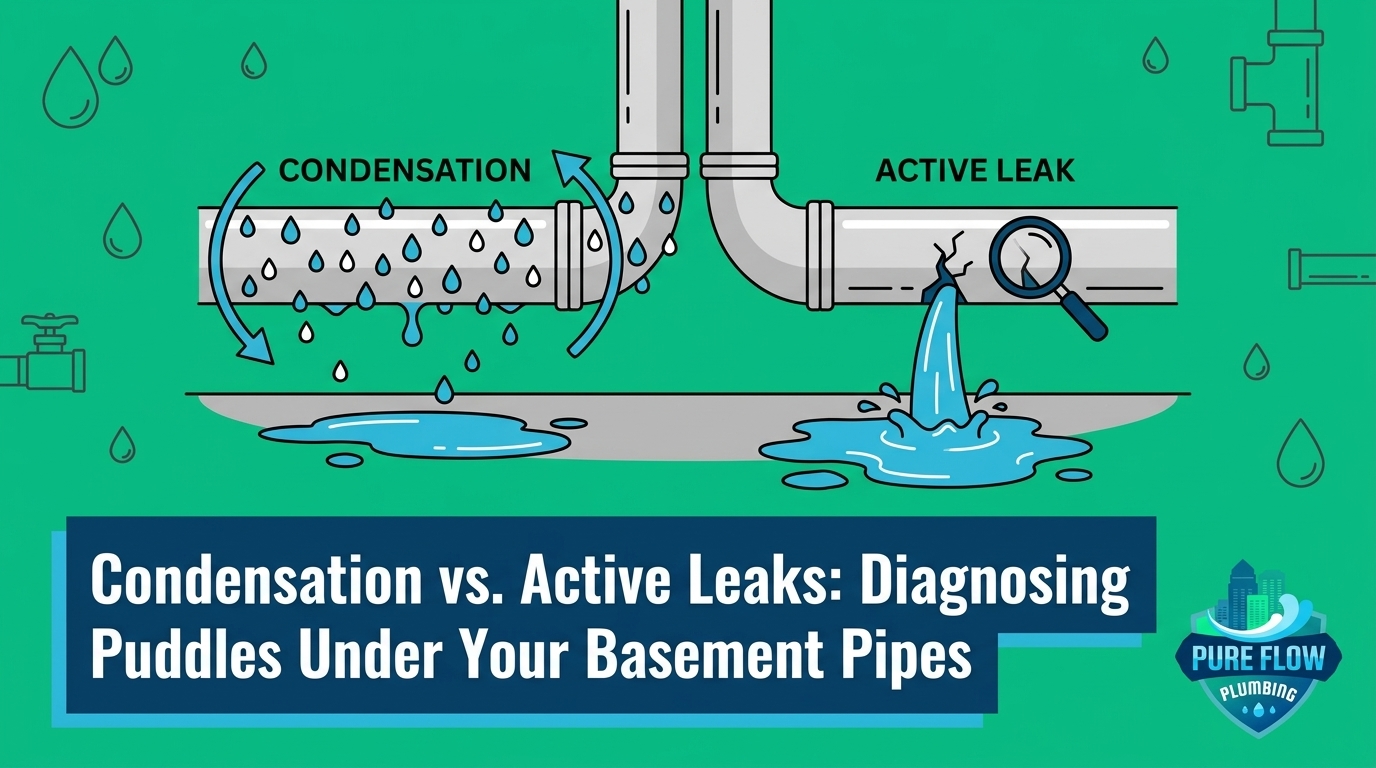
How to interpret what you see: If you notice uniform, misty beads forming evenly across the entire surface of the pipe—much like a cold glass of iced tea on a hot porch—you are dealing with condensation. However, if the pipe remains mostly dry but you see a distinct, localized water droplet forming and falling from a single seam or joint, you are looking at an active leak.

Identifying the Telltale Signs of a True Pinhole Leak
If your wipe-and-wait test points toward a leak, or if you simply want more confirmation, there are specific indicators that point to an actual plumbing failure rather than environmental moisture. During our routine service calls in York, SC basements and crawlspaces, our technicians frequently see aging pipes develop tiny pinhole leaks that masquerade as heavy sweat.
Pinpointing Localized Drips
A true leak behaves differently than condensation. You will want to look for localized dripping that persists regardless of the surrounding air temperature or humidity levels. Water is tricky; it naturally travels along the bottom of a horizontal pipe before finally dripping off at the lowest point. This means the puddle on your floor might not be directly underneath the actual hole. By drying the pipe first, you can trace the water back to its exact source before it has a chance to travel.
Corrosion and Joint Discoloration
Visual inspection of the pipe’s surface can tell you a lot about its health. When a pipe has been leaking slowly over time, it leaves behind physical evidence.
- Green or white crust: On copper pipes, a slow pinhole leak or failing joint will often develop a crusty, green oxidation (patina) or heavy white mineral deposits.
- Rust spots: On galvanized steel pipes, look for bubbling rust or orange-brown staining around the threaded joints.
- Rapidly growing puddles: Condensation usually creates a persistent damp spot. If the puddle beneath the pipe is growing rapidly or flowing toward a drain, you have a leak.
The ultimate confirmation: If you suspect a hidden issue, perform a water meter test. Shut off all plumbing fixtures inside and outside your home. Locate your water meter and watch the low-flow leak indicator dial (usually a small red triangle or a spinning star). If that dial is moving while all water is shut off, water is escaping your system. This is a common culprit when homeowners wonder why your August water bill spiked even without a visible leak.
| Visual Sign | Likely Cause: Condensation | Likely Cause: Active Leak |
|---|---|---|
| Moisture Pattern | Even, misty beads across the entire pipe | Localized droplet at a specific joint or seam |
| Pipe Appearance | Clean, smooth surface under the water | Green crust, white mineral buildup, or rust |
| Puddle Size | Small, persistent damp spot | Actively growing or flowing puddle |
| Water Meter Dial | Stationary when fixtures are off | Spinning even when fixtures are off |
Managing Secondary Risks of Uncontrolled Pipe Condensation
Even if your diagnostic testing reveals that your pipes are “just sweating,” you cannot simply ignore the problem. The extreme dew points in the Southeast make managing indoor humidity a year-round structural necessity, not just a seasonal comfort issue. The resulting puddles from heavy condensation still pose a severe risk to York, SC basements and crawlspaces.
Protecting Your Home’s Foundation
The Problem: Continuous dripping from sweating pipes leads to localized water damage. When water pools on a concrete basement floor or a dirt crawlspace, it doesn’t just evaporate. It seeps into the porous concrete or saturates the soil.
The Cause: Over time, this constant introduction of moisture degrades structural wood, rots floor joists, and weakens drywall. The dampness creates an environment where pests thrive and foundation cracks can worsen through hydrostatic pressure.
The Solution: Proper drainage is critical to handle unavoidable moisture. Ensure your floors are graded toward a drain. In crawlspaces or basements prone to heavy water accumulation, professional sump pump installation is highly recommended to actively eject pooling water before it damages your foundation.
Indoor Air Quality Concerns
The Problem: A damp, dark environment is the perfect breeding ground for mold and mildew. If your pipes sweat profusely all summer, mold spores will eventually take hold on nearby organic materials like wood joists or cardboard storage boxes.
The Cause: Persistent dampness directly degrades your indoor air quality. Because a significant portion of the air on your first floor rises from the basement or crawlspace (known as the stack effect), you will eventually notice musty odors permeating your living spaces.
The Solution: Improve the ventilation in your lower levels. Installing high-quality foam pipe insulation around all accessible cold water lines instantly stops the humid air from touching the cold metal, eliminating the sweat. Additionally, running a heavy-duty dehumidifier in your basement pulls the excess moisture out of the air, lowering the dew point and protecting your home.
When to Rely on Professional Pipe Diagnostics
There is a distinct line between safe visual checks and the need for professional intervention. If your wipe-and-wait test or visual inspection points toward an active leak, it is time to call in the experts. As local plumbing experts who want to save homeowners from unnecessary emergency calls, the Pure Flow Plumbing team shares this diagnostic framework so you can check your system safely. But when a repair is needed, our professional tools eliminate the guesswork.
Non-Destructive Leak Detection Methods
We strongly advise against invasive DIY repairs. Wrenching on old, corroded pipes to tighten a leaking joint or applying temporary chemical sealants can easily cause a weakened pipe to burst, turning a minor drip into a major flood. Professional plumbers utilize non-destructive leak detection tools to pinpoint issues behind walls, under concrete slabs, or in tight crawlspaces.
- Acoustic sensors: These highly sensitive microphones listen for the distinct hiss or vibration of water escaping a pressurized pipe, pinpointing the leak’s location without tearing open drywall.
- Thermal imaging: Infrared cameras detect temperature anomalies behind walls, revealing hidden moisture plumes from leaking pipes.
- Moisture meters: These tools measure the exact moisture content in wood and drywall to map how far a leak has spread.
Preventing Catastrophic Water Damage
Having a licensed expert evaluate the integrity of your aging pipes during August late-summer peak humidity prevents catastrophic water damage. Catching a failing copper joint or a heavily corroded steel fitting early saves thousands in structural repairs and mold remediation. Furthermore, a professional can inspect your home’s drainage systems. Maintaining clear floor drains through professional drain cleaning in York ensures that any moisture—whether from heavy summer sweat or a minor plumbing leak—has a safe, immediate exit path out of your home.
Gain Peace of Mind with Expert Diagnostics
Distinguishing between harmless pipe sweat and an active leak is the vital first step in protecting your home from water damage. By understanding the intense psychrometrics of York, SC basements and crawlspaces, and by using the simple wipe-and-wait test, you can accurately assess your plumbing without risking further damage.
However, if your visual tests reveal localized dripping, crusty corrosion, or a spinning water meter dial, professional diagnostics are the only way to completely eliminate the guesswork. Do not let a suspected leak keep you up at night. By trusting local diagnostic experts to evaluate your system, you gain the definitive answers you need to confidently identify condensation versus an actual leak, ensuring your home remains dry, safe, and protected.
Frequently Asked Questions
How do you tell if a pipe is leaking or just sweating?
The most reliable method is the wipe-and-wait test. Dry the pipe completely with a paper towel and wait 15 to 30 minutes without running any water. If moisture returns as an even, misty layer of beads across the whole pipe, it is sweating; if a distinct water droplet forms at a single joint, it is leaking.
Why are my basement pipes dripping in summer?
Your cold water supply lines run between 50 and 60 degrees, which is much colder than the humid summer air in your basement. When that warm, moisture-heavy air touches the cold pipes, the water vapor rapidly condenses into liquid droplets. This condensation can become heavy enough to drip onto the floor, mimicking a leak.
Is condensation on cold water pipes normal?
Yes, condensation on uninsulated cold water pipes is a completely normal physical reaction in highly humid environments. While the sweating itself isn’t a plumbing failure, the resulting water can cause secondary damage to wood, drywall, and flooring if left unmanaged.
How do I stop my cold water pipes from sweating?
The most effective way to stop pipe sweat is to wrap the cold water lines with foam pipe insulation, which creates a thermal barrier between the cold pipe and the warm air. Additionally, running a dehumidifier in your basement or crawlspace lowers the overall ambient moisture, preventing condensation from forming.
What should I do if my water meter indicates a hidden leak?
If your water meter’s leak indicator dial is spinning while all fixtures are turned off, you should contact a licensed plumbing professional immediately. Hidden leaks can occur behind walls or under concrete slabs, and professionals use non-destructive tools like acoustic sensors and thermal imaging to locate and repair the leak safely.