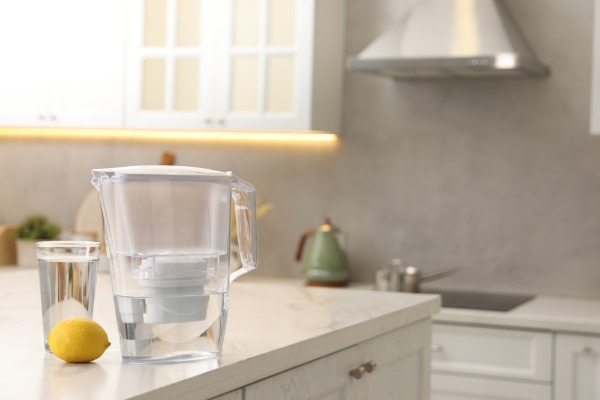
A water filter can treat water as it enters your home, but it cannot repair or clean every source of contamination inside the plumbing itself. If an older pipe, corroded fitting, or stagnant section of plumbing is affecting water quality, filtration may reduce certain contaminants without fixing where they came from.
That issue can be easy to miss, even for those who own their own water filtration system in Rock Hill, SC. A homeowner may test the incoming water, install a filter, and still notice discoloration, a metallic taste, sediment, or other changes at the tap.
At Pure Flow Plumbing, we look at the entire water path when we evaluate these problems. The source matters. So does the condition of the plumbing between the service connection and the faucet.
Where Can Plumbing Contamination Come From?
Water entering your property can be within applicable drinking-water standards and still pick up unwanted material after it enters the house.
Older plumbing is one possible source. Corrosion inside metal pipes and fittings can release particles or metals into standing water. Deteriorated components can also contribute sediment or discoloration.
The problem may be limited to one fixture. If only the upstairs bathroom has discolored water while the kitchen and other fixtures run clear, the source may be closer to that fixture than to the incoming supply.
Temperature can also affect what homeowners notice. Rock Hill has hot, humid summers, and water can sit in household pipes for hours while the home is unoccupied. A faucet that produces discolored water after sitting overnight deserves more attention than one that simply has a brief burst of harmless air.
A professional evaluation can help separate a water-quality problem from a plumbing problem.
What Does a Water Filter Actually Remove?
Filtration equipment is designed around specific contaminants. There is no single filter that removes everything from every water supply.
Some systems are designed to reduce sediment and particles. Others target chlorine, certain chemicals, metals, or other substances. Reverse osmosis systems use a membrane process that can reduce a broader range of dissolved contaminants than basic sediment or carbon filtration, depending on the equipment and contaminant.
That is why we do not recommend choosing equipment based only on a general claim that a filter produces “cleaner water.”
Testing and identifying the suspected contaminant should come first. A homeowner considering water treatment services may need a different approach for sediment than for dissolved minerals, for example.
Can Filtration Remove Contamination Already Inside the Pipes?
Sometimes filtration can reduce what reaches the faucet. It does not remove contamination from the pipe itself.
Consider an older section of plumbing that releases particles into the water. A filter installed upstream of the affected fixture may capture some of that material after it enters the water stream. The damaged pipe remains.
The same principle applies to deposits inside plumbing. A filter does not scrape the interior of a supply line clean, repair corrosion, replace a deteriorated fitting, or correct a damaged section of pipe.
A whole home water filtration system can provide treatment at a central point so filtered water travels through the home’s distribution plumbing. That can be useful when the incoming water needs treatment throughout the property. It still does not turn defective plumbing into new plumbing.
What If Only One Faucet Has a Problem?
The location of the problem can provide useful evidence.
If every cold-water fixture shows the same discoloration, taste, or sediment, we look farther upstream. If one faucet is affected, the faucet, supply line, shutoff valve, branch piping, or nearby plumbing becomes more relevant.
Aerators can also collect sediment. Removing and inspecting an aerator may reveal particles that have been traveling through the plumbing, although cleaning the screen does not identify the original source.
Hot water creates another clue. If discoloration appears only when hot water is used, the water heater and its connected plumbing deserve inspection. Sediment accumulation inside the tank can affect water quality and may become more noticeable as the system ages.
These details help us decide whether filtration, plumbing work, or both belong in the solution.
Can an RO Filter Fix a Plumbing Problem?
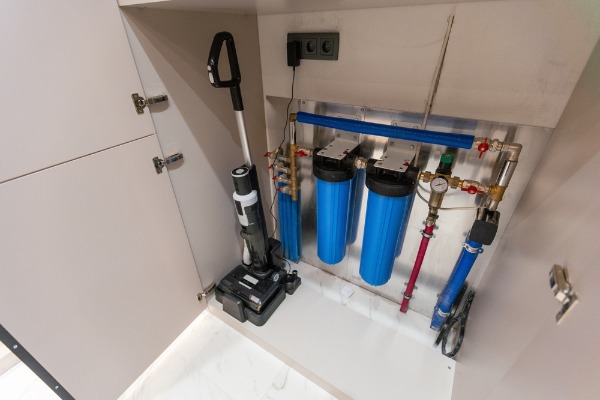
No. A reverse osmosis water filter can treat water at the point where it is installed, but it cannot repair contaminated or deteriorated piping upstream.
This distinction is especially important with point-of-use equipment. An RO system installed beneath a kitchen sink treats the water delivered to that system. It does not treat water sitting in the rest of the home’s plumbing.
If the concern is limited to drinking and cooking water, point-of-use treatment may be appropriate. If the entire property has a water-quality issue, a different system may make more sense.
We look at the intended use before recommending equipment.
When Plumbing Repair Should Come Before Filtration
There are situations where replacing or repairing plumbing should take priority.
Visible corrosion, recurring leaks, damaged supply piping, persistent sediment from a specific branch, or evidence of a failing component can point toward a plumbing issue rather than a filtration issue.
A plumbing repair may address the source more directly than adding another filter.
The same applies when water quality changes after plumbing work. New piping, fittings, valves, or fixtures can sometimes introduce temporary changes in appearance or taste. Flushing and inspection may be appropriate before assuming the property needs a larger treatment system.
For homes in established Rock Hill neighborhoods, the age and materials of the plumbing can vary considerably from one property to another. Two houses on the same street can have very different piping conditions.
What About a Whole-Home Filtration Installation?
Installation location affects what a filtration system can accomplish.
A properly selected system can treat water at a central entry point before it reaches individual fixtures. This is useful when the treatment objective applies to the household water supply rather than one drinking-water tap.
The plumbing around the equipment also matters. Valves, bypass arrangements, drain connections, pressure, available installation space, and the existing pipe configuration all affect the finished setup.
During water filtration installation, we need to consider how the treatment equipment fits into the existing plumbing rather than treating the filter as an isolated appliance.
That approach is particularly useful in homes where previous renovations have added or altered plumbing over the years.
Does Filtered Water Mean the Plumbing Is Clean?
No.
A filter can improve the water coming through a faucet without changing the condition of the pipes carrying it.
That does not make filtration ineffective. It simply defines what the equipment is doing. A properly selected filter can be an important part of a water-quality solution. It should not be presented as a substitute for repairing a known plumbing defect.
Some home water purification systems also combine multiple treatment stages because different contaminants require different treatment methods. The right configuration depends on the water chemistry and the problem being addressed.
We also consider maintenance. Filters and membranes have service intervals. A neglected filter can lose performance and become another maintenance issue inside the home’s water system.
How We Investigate a Water-Quality Problem
We start with the symptoms.
Is the water discolored at every fixture? Does the problem appear only after the water has been sitting? Is it limited to cold or hot water? Does one bathroom have the issue while the rest of the home does not?
Those answers narrow the possibilities.
We then look at the plumbing and existing treatment equipment. Where practical, water testing can identify the contaminant rather than relying on appearance or taste alone.
Our water filtration services can address treatment needs, but we also look for plumbing conditions that could be contributing to the problem.
This prevents a common mistake: installing equipment before identifying what the equipment actually needs to accomplish.
When Should You Call a Plumber?
Call us when water quality changes suddenly, when discoloration keeps returning, when sediment appears repeatedly, or when the problem is isolated to a particular fixture or section of the home.
A leak, damaged water line, unusual pressure change, or visible corrosion deserves plumbing attention even if a filtration system is already installed.
If there is a suspected contamination event or an immediate plumbing failure, emergency plumbing may be appropriate. For less urgent concerns, an inspection can help determine whether the next step involves treatment equipment, plumbing work, water testing, or some combination.
Frequently Asked Questions
Can old pipes contaminate drinking water?
Yes. Corrosion and deterioration can introduce metals, particles, or other material into water as it travels through household plumbing.
Should I install a filter before replacing old pipes?
Not automatically. If testing or inspection indicates that the plumbing is contributing to the problem, correcting the source may be more appropriate than relying on filtration alone.
Does an under-sink filter treat the whole house?
No. A point-of-use filter generally treats water at the fixture where it is installed, while a central treatment system can treat water for multiple fixtures.
A Filter Should Treat the Water, Not Hide the Problem
A filtration system can be an effective way to improve water quality. It cannot correct every problem that happens after water enters the house.
At Pure Flow Plumbing, we evaluate both sides of that equation. If you need a water filtration system in Rock Hill, SC, call us. We can inspect the existing plumbing, discuss the symptoms you are seeing, and provide a free estimate for the appropriate work.