
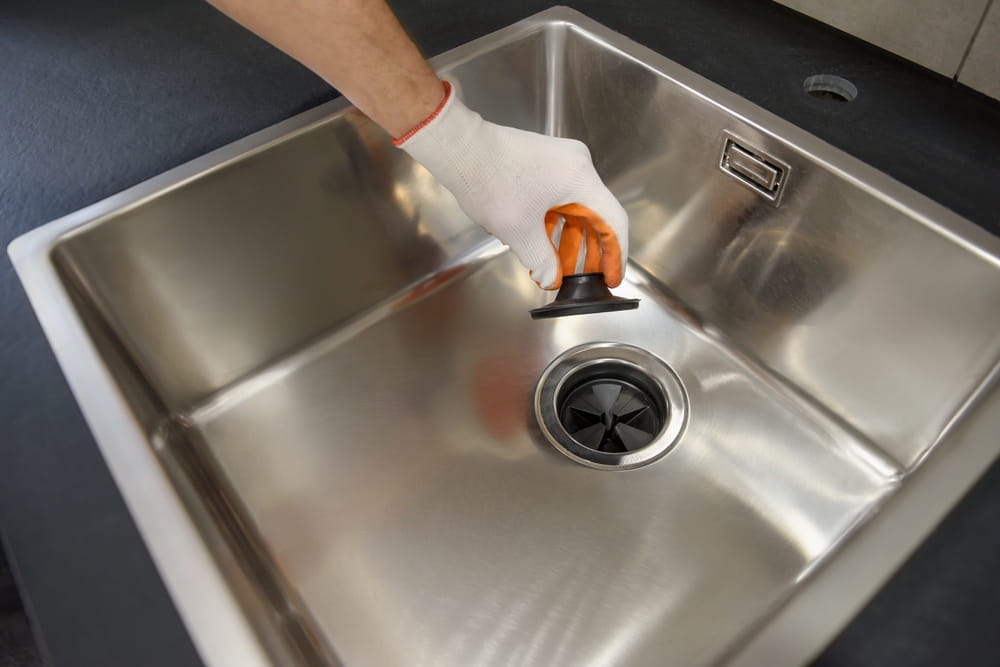
You turn on the kitchen sink faucet, flip the garbage disposal switch, and hear a low, steady hum. The motor is clearly receiving electricity, but the blades will not spin, and the water starts backing up into the sink basin.
When a garbage disposal hums without grinding, the unit is stuck. This situation usually stems from a mechanical jam in the grind chamber or an overheating motor. Understanding how these systems operate helps you determine whether you are dealing with a simple physical blockage or a deeper issue that requires professional drain cleaning in York, SC.
Why a Garbage Disposal Hums But Will Not Spin
A garbage disposal relies on an electric motor to spin an impeller plate equipped with metal swivel lugs. This plate forces food waste against a stationary grind ring, breaking solid pieces down into fine particles before flushing them into your wastewater pipes.
When you hear a humming sound, electrical power is reaching the motor windings, but the impeller plate cannot rotate. Because the motor cannot turn freely, it converts that electrical energy into heat and vibration rather than movement.
Leaving the disposal switch turned on while the motor is jammed will trip the internal thermal overload breaker located at the bottom of the unit. This built-in safety feature shuts off power to prevent the motor from burning out or creating an electrical hazard.
Common Causes of a Jammed Disposal
Most humming disposals stem from items caught between the rotating impeller plate and the outer grind ring. The obstruction can be an accidental foreign object or an item that should never go down the drain.
Foreign Objects
Utensils like teaspoons, small corn-on-the-cob holders, twist ties, bottle caps, or pop tabs can slip down the drain unnoticed. Once the disposal turns on, these metal or hard plastic items wedge tightly under the swivel lugs or between the plate edge and the housing wall.
Fibrous and Starchy Food Waste
Certain food items do not break down cleanly inside a residential disposal:
- Celery stalks, corn husks, and artichokes: Long, fibrous strings wrap around the central spindle and bind the rotating mechanism.
- Potato peels and pasta: High-starch foods create a dense, viscous paste when ground. This paste packs into the clearance gaps between moving parts, binding the plate.
- Eggshells and coffee grounds: While these items ground up easily, the tiny, dense particles settle in the flywheel housing or trap below, forming a concrete-like blockage that stops the impellers.
Hard Matter and Bones
Large poultry bones, fruit pits, and seafood shells do not pulverize. Instead, they bounce around the chamber until they wedge under a swivel lug, locking the entire assembly instantly.
Internal Mechanical Failure
If no visible debris is jamming the grind chamber, the issue may sit within the unit itself. Over time, water seals degrade, allowing moisture into the motor housing. This leads to corroded bearings, rusted flywheel components, or a failed capacitor. In these cases, the motor lacks the torque needed to turn, even with an empty chamber.
Drain Clog vs. Motor Failure: How to Tell the Difference
Disposal issues often overlap with plumbing drainage problems. Knowing where the failure sits helps you take the right corrective steps.
| Symptom | Physical Jam / Clog | Motor or Electrical Failure |
|---|---|---|
| Water Drainage | Water stands in sink; jammed plate blocks drain opening | Water drains normally if chamber is empty, or leaks beneath unit |
| Humming Sound | Loud hum, stops after 30 seconds when safety breaker trips | Continuous hum with clean chamber, or no sound at all |
| Flywheel Rotation | Stiff or completely locked when turned with Allen wrench | Flywheel turns freely by hand using Allen wrench |
| Electrical Panel | Rarely trips main panel; trips unit red reset button | Instantly trips main home circuit breaker when switched on |
| Visual / Smell | Debris or foreign objects visible in grind chamber | Burning smell, smoke, or water dripping from motor housing |
Signs of a Physical Jam or Clog
- Standing water in the sink: Water collects in the basin because the jammed impeller plate blocks the drain opening at the bottom of the chamber.
- Humming stops after 30 seconds: The thermal overload switch trips, cutting power to the unit.
- Visible obstruction: You can see an object lodged under the blades using a flashlight.
- Slow drainage elsewhere: If water backs up into an adjacent sink bowl or drains sluggishly even after clearing the disposal jam, a blockage sits further down in the P-trap or main branch line.
Signs of Motor or Electrical Failure
- Instant breaker trips: The moment you flip the switch, your main home electrical panel trips a circuit breaker.
- Continuous humming with a clean chamber: The flywheel turns freely by hand using an Allen wrench, but the motor only hums and refuses to spin when powered.
- Burning smell or electrical smoke: Overheated wiring insulation or shorted motor windings emit a distinct, pungent odor.
- Leaking below the unit: Water drips directly from the bottom of the plastic motor housing, signaling internal seal failure that has exposed electrical components to water.
Safe Troubleshooting Steps You Can Take at Home
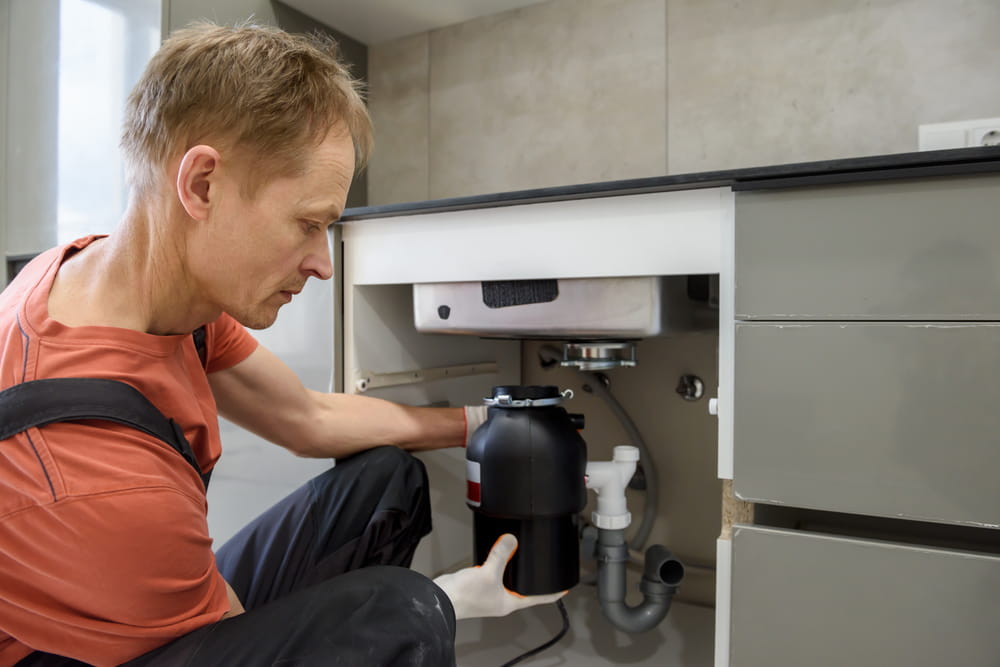
Before calling a clogged drain service technician, you can try a few safe, mechanical troubleshooting steps to free a jammed flywheel. Always prioritize personal safety when working with sink appliances.
Step 1: Turn Off the Electrical Power
Never put your hands near the sink drain while the disposal connects to power.
- Flip the wall switch to the OFF position.
- Unplug the disposal cord from the wall outlet beneath your cabinet.
- If the unit is hardwired directly into a junction box, turn off the corresponding circuit breaker at your main electrical panel.
Step 2: Check for Visible Foreign Objects
Shine a bright flashlight straight down through the rubber splash guard into the grind chamber. Do not reach into the disposal with your fingers. Use a pair of long-nosed pliers, tongs, or a specialized disposal retriever tool to lift out any visible utensils, bone fragments, or debris.
Step 3: Manually Rotate the Flywheel Impeller
Most residential disposals feature a hex-head socket in the center of the bottom baseplate beneath the sink.
- Retrieve the 1/4-inch Allen wrench (or jam-buster wrench) that came with the unit.
- Insert the wrench into the center socket at the very bottom of the disposal underneath your cabinet.
- Work the wrench back and forth in both clockwise and counterclockwise directions.
- Apply firm, steady pressure until you feel the jam give way and the wrench rotates freely through a full 360-degree circle.
Note: If your disposal model lacks a bottom hex socket, place a wooden broom handle down through the top sink drain opening. Wedge the tip against one of the metal swivel lugs on the outer edge of the plate and leverage it back and forth to loosen the flywheel.
Step 4: Reset the Thermal Overload Switch
If the unit hummed earlier but now makes no sound when turned on, the thermal breaker has tripped.
- Allow the unit to cool down for 5 to 10 minutes.
- Locate the small red reset button on the bottom or lower side of the disposal body under the sink.
- Push the red button inward until you feel or hear it click.
Step 5: Plug In and Test With Cold Water
- Reconnect the electrical power supply.
- Run a strong flow of cold tap water into the sink basin.
- Flip the wall switch on for 2 to 3 seconds to check for smooth operation.
- Keep the cold water running for 30 seconds to flush any dislodged debris completely out of the P-trap.
When a Jam Turns Into a Plumbing Drain Issue
Clearing the disposal flywheel does not always solve the drainage problem. Food items ground up during a jam can travel into the wastewater line and form a dense plug further down the pipe.
In homes throughout York County, regional factors can exacerbate these plumbing issues. Older homes in historic downtown York often feature legacy cast iron or galvanised drain lines. Over decades, these pipes develop rough, corroded interior surfaces and mineral scale deposits from hard local groundwater. When shredded fibrous material, grease, or starch exits the disposal, it clings to these rough pipe walls, rapidly building into a stubborn obstruction.
Chemical drain cleaners purchased at local retail stores are not a safe remedy for these blockages. These caustic chemicals rely on intense heat-generating reactions that can soften PVC pipes, corrode old metal joints, and damage internal disposal seals. Furthermore, if the chemical solution fails to clear the obstruction, it remains trapped in the sink basin, creating a splash hazard during manual repair efforts.
When a blockage sits beyond the disposal unit, professional drain cleaning services utilize mechanical drain snakes or high-pressure water equipment to restore full pipe capacity without damaging your plumbing infrastructure.
How to Prevent Future Disposal Jams
A few simple habit changes can extend the lifespan of your garbage disposal and lower the risk of kitchen pipe blockages:
- Always run cold water: Cold water solidifies fats and oils, allowing the disposal blades to chop them into solid bits that wash down the line. Hot water melts grease, allowing it to coat the drain walls further down the line as it cools.
- Feed food in small batches: Avoid dumping large bowls of food waste into the chamber all at once. Feed items gradually while the unit runs with cold water.
- Avoid problematic materials: Keep coffee grounds, eggshells, fibrous vegetables, pasta, rice, bones, and non-food items out of the disposal completely. Dispose of these in your compost or trash bin instead.
- Clean with ice and citrus: Periodically throw two cups of ice cubes and a few cut lemon peels into the disposal. The hard ice knocks built-up sludge off the flywheel and grind ring, while the citrus neutralizes trapped food odors.
Frequently Asked Questions
Can running a jammed disposal damage my electrical system?
A jammed disposal draws high current, which generates heat rapidly. While the internal thermal reset button or your home circuit breaker should trip to protect the wiring, repeatedly trying to run a jammed unit can damage the motor windings or trip the electrical breaker for your kitchen outlet circuit.
How long does a standard kitchen garbage disposal last?
With proper use and routine cleaning, a quality garbage disposal typically lasts between 8 and 12 years. If your unit is more than a decade old and frequently jams, leaks from the base housing, or hums due to motor wear, replacing the unit is often more cost-effective than repairing it.
Why does my disposal hum even after I cleared all food debris?
If the grind chamber is completely empty and the flywheel turns smoothly by hand, a persistent hum indicates a failed starter capacitor, seized internal bearings, or corroded motor components. At this stage, the motor can no longer generate enough torque to spin under power, requiring unit replacement.
Is it safe to use an Allen wrench on my disposal while it is plugged in?
No. Always disconnect electrical power by unplugging the unit beneath the sink or turning off the circuit breaker before placing any tool into the socket or chamber. This prevents accidental motor startup if the jam clears suddenly.
Professional Disposal and Drain Solutions
If clearing debris and resetting the overload switch does not restore your unit, the motor or bearings have likely failed. Pure Flow Plumbing provides reliable drain cleaning services and disposal repairs across York and surrounding areas, focusing on diagnosing the exact root cause. We deliver quality workmanship from skilled workers with fast service, fair pricing, and free estimates before any work begins. Available 24 hours a day, 7 days a week for urgent needs, we offer 10% off for first-time customers as well as military, senior citizen, and first responder discounts.
When DIY troubleshooting reaches its limit, reach out to Pure Flow Plumbing to speak with a technician and get your kitchen running smoothly again.