
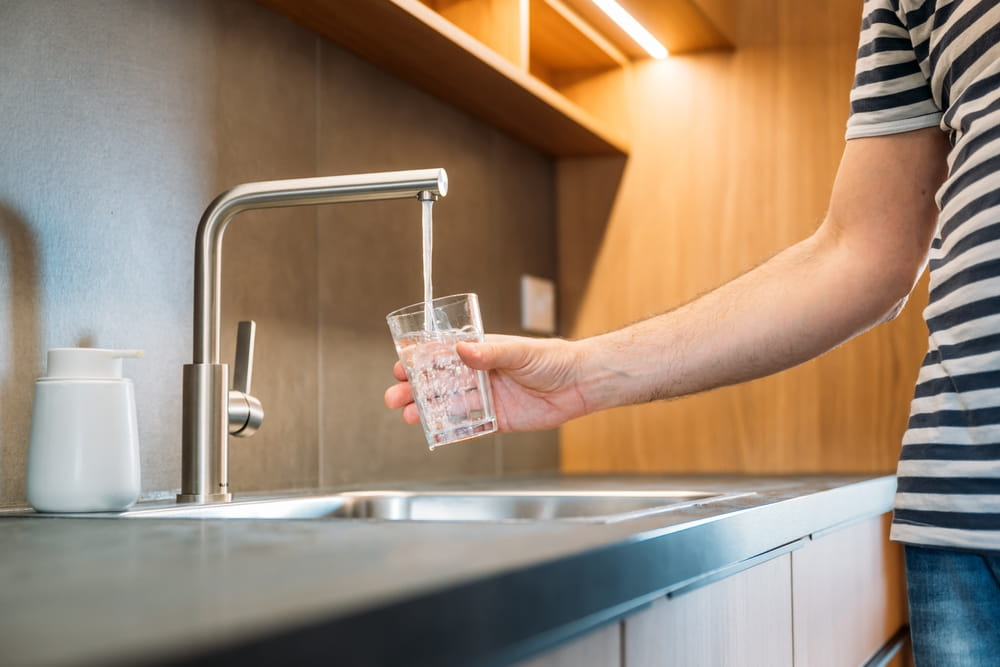
If your tap water tastes or smells different as the seasons change, you are not imagining it. Seasonal shifts in source water temperature, algae activity, and treatment adjustments all affect how water tastes at the faucet. In Rock Hill, these changes are tied directly to Lake Wylie and the Catawba River, where thermal turnover stirs sediment and organic material at predictable times of year.
For many property owners, the fix is simple: let the water run for a minute, use a pitcher filter, or install a point-of-use reverse osmosis water filter at the kitchen sink. For whole-home consistency, a water filtration system in Rock Hill, SC can remove chlorine, sediment, and taste-affecting compounds before water reaches every tap.
What Causes Seasonal Taste Changes in Rock Hill Tap Water?
Rock Hill draws its drinking water from Lake Wylie and the Catawba River. Lakes are sensitive to seasonal temperature swings, which cause thermal stratification and periodic turnover of water layers. When atmospheric temperatures rise or fall, these layers flip, stirring up sediment and naturally occurring organic matter that can affect taste and odor.
The city’s own water quality report notes that most customer complaints about taste and odor occur in late spring and at the beginning of winter, matching these turnover periods.
Beyond lake turnover, several seasonal factors influence taste:
- Warmer water holds less dissolved gas and releases chlorine faster, which can make chlorine taste more noticeable in summer. Some utilities slightly adjust disinfectant levels seasonally to maintain safety margins.
- Algae blooms are more common in warm months. Even after treatment, trace compounds like geosmin and MIB from algae can create earthy or musty notes.
- Higher summer demand can increase water age in parts of the distribution system, giving water more time to interact with pipes and pick up subtle flavors.
- Winter runoff and road treatments can slightly change mineral content in some regions, though Rock Hill’s surface-water sources are less affected by de-icing salts than groundwater systems.
These shifts are usually aesthetic, not safety issues. Rock Hill’s water consistently meets or exceeds state and federal standards, and the utility monitors more than 100 contaminants year-round.
How Rock Hill’s Treatment Process Affects Taste
At the Cherry Road Water Treatment Plant, Rock Hill uses a multi-step process designed to remove sediment, bacteria, and organic matter before water enters the distribution system. Key steps include:
- Powdered activated carbon (PAC) to adsorb natural organic matter that causes taste and odor issues
- Coagulation and flocculation to clump particles so they can settle out
- Filtration through anthracite and sand layers
- Disinfection with chlorine and chlorine dioxide to control microbes
- pH adjustment and corrosion control to protect pipes and limit metal leaching
Even with advanced treatment, trace organics and disinfectant byproducts like trihalomethanes (TTHMs) and haloacetic acids (HAA5) can remain at low levels. In 2024, Rock Hill’s highest detected TTHMs were 54.5 ppb and HAA5 were 31.6 ppb, both below EPA limits of 80 ppb and 60 ppb respectively. These byproducts can contribute to a slightly chemical or “swimmy” taste, especially when water is warm or has sat in pipes.
What Homeowners Notice in Summer vs. Winter
Most seasonal taste differences fall into a few common patterns:
- Summer: stronger chlorine smell, earthy or musty notes, or a flat taste. Warm water also makes chlorine and organics more volatile, so odors are easier to detect.
- Spring and fall turnover: sudden musty or earthy tastes as lake layers mix and stir sediment.
- Winter: water often tastes sharper or cleaner, though some people notice a slightly different mineral balance after heavy rains.
If you notice persistent discoloration, black particles, or blue stains, those point to plumbing issues like deteriorating seals or copper pipe corrosion, not seasonal source changes.
Simple Steps to Improve Taste at Home
Before considering equipment upgrades, try these low-cost steps:
- Flush the tap for 30 to 60 seconds after water has sat in pipes, especially first thing in the morning.
- Use cold water for drinking and cooking. Hot water heaters can add metallic or stale flavors.
- Clean faucet aerators and showerheads to remove buildup that traps organics and minerals.
- Store water in a covered pitcher in the refrigerator. Chilling reduces chlorine perception and lets volatile compounds dissipate.
- Check for local notices. Rock Hill Utilities posts updates on taste and odor events tied to lake turnover or maintenance.
If taste issues persist across multiple faucets or seasons, a filtration upgrade often provides the most consistent relief.
When a Water Filtration System Makes Sense
Water treatment services are worth considering if you:
- Notice chlorine taste or odor year-round, not just during turnover periods
- See sediment, rust particles, or scaling on fixtures
- Want better-tasting water for cooking, coffee, and ice
- Prefer to reduce bottled water use
Whole-house systems typically use one or more of these methods:
- Mechanical filtration to remove sediment and rust
- Activated carbon to reduce chlorine, chloramines, and many organic compounds that affect taste and odor
- Ion exchange (water softening) to reduce hardness minerals that cause scale and spots
- Reverse osmosis water filter to remove dissolved solids, many heavy metals, and a wide range of contaminants for the purest drinking water
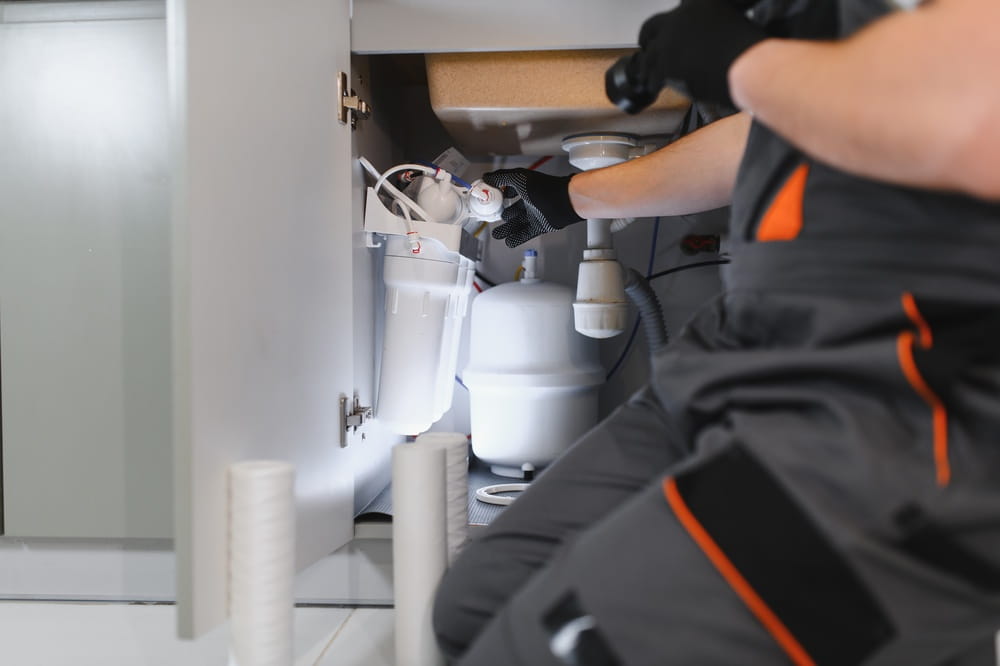
Many homes pair a whole-house carbon filter with a dedicated reverse osmosis water filter at the kitchen sink. The carbon stage cuts chlorine and odors before water reaches the RO membrane, which then removes dissolved salts, nitrates, some PFAS, and other trace contaminants.
Whole-house reverse osmosis is less common and usually reserved for homes with very high total dissolved solids (TDS), specific contaminant concerns, or private wells. For most city-water homes in Rock Hill, a carbon-based whole-house filter plus a kitchen RO or high-quality under-sink filter delivers excellent taste without the cost and water waste of whole-home RO.
Choosing the Right System for Your Home
The best setup depends on your water use, plumbing layout, and priorities. Key considerations:
- Flow rate and pressure needs. Larger homes or homes with multiple bathrooms may need higher-capacity filters to avoid pressure drops.
- Space and access. Whole-house systems install near the main shutoff, often in a garage, utility room, or crawl space.
- Maintenance. Carbon filters typically need media replacement every 6 to 12 months depending on usage and water quality. RO membranes last 2 to 5 years, with pre- and post-filters changed more frequently.
- Water waste. Standard under-sink RO systems send some water to drain. Newer designs are more efficient, but it is still a factor if you are highly water-conscious.
A qualified plumber can test your water, review your current issues, and match a system to your goals without overselling.
FAQs
Is seasonal taste change a sign my water is unsafe?
Usually no. Rock Hill’s water meets or exceeds all state and federal standards year-round. Seasonal taste and odor shifts are typically aesthetic and tied to lake turnover, algae, and treatment adjustments.
Will a water filter remove all taste and odor issues?
A good carbon-based filter removes most chlorine, chloramines, and many organic compounds that cause taste and odor. Reverse osmosis goes further by removing dissolved solids and many trace contaminants. No system removes 100% of every possible compound, but most homeowners notice a clear improvement.
Do I need whole-house filtration or just a kitchen filter?
If your main concern is drinking and cooking water, an under-sink reverse osmosis water filter may be enough. If you also want better shower water, less spotting on fixtures, and protection for appliances, a whole-house system plus a kitchen RO is often the best balance.
How often do filters need to be changed?
Carbon pre-filters and sediment filters should usually be changed every 6 to 12 months, depending on usage and water quality. RO membranes typically last 2 to 5 years. Your installer will provide a maintenance schedule based on your specific system and household size.
If your tap water tastes off more in some seasons than others, start by flushing taps and checking for local notices. If the issue persists or you want consistent great-tasting water year-round, a properly sized filtration system can make a noticeable difference at every tap.
How Pure Flow Plumbing Can Help Rock Hill Property Owners
Pure Flow Plumbing works with property owners across Rock Hill to evaluate water quality concerns and install the right filtration approach. We focus on fair pricing, quality workmanship from skilled workers, and fast service so you are not waiting weeks for better-tasting water.
We offer free estimates to review your current water issues, explain your options in plain language, and provide a clear scope and price before any work begins. Our team is available 24 hours a day, 7 days a week for urgent plumbing needs, and we can coordinate filtration installations around your schedule to minimize disruption.
First-time customers receive 10% off, and we extend additional discounts to military members, senior citizens, and first responders.
Ready for better-tasting water? Contact Pure Flow Plumbing for a free estimate and start enjoying better-tasting tap water year-round.